
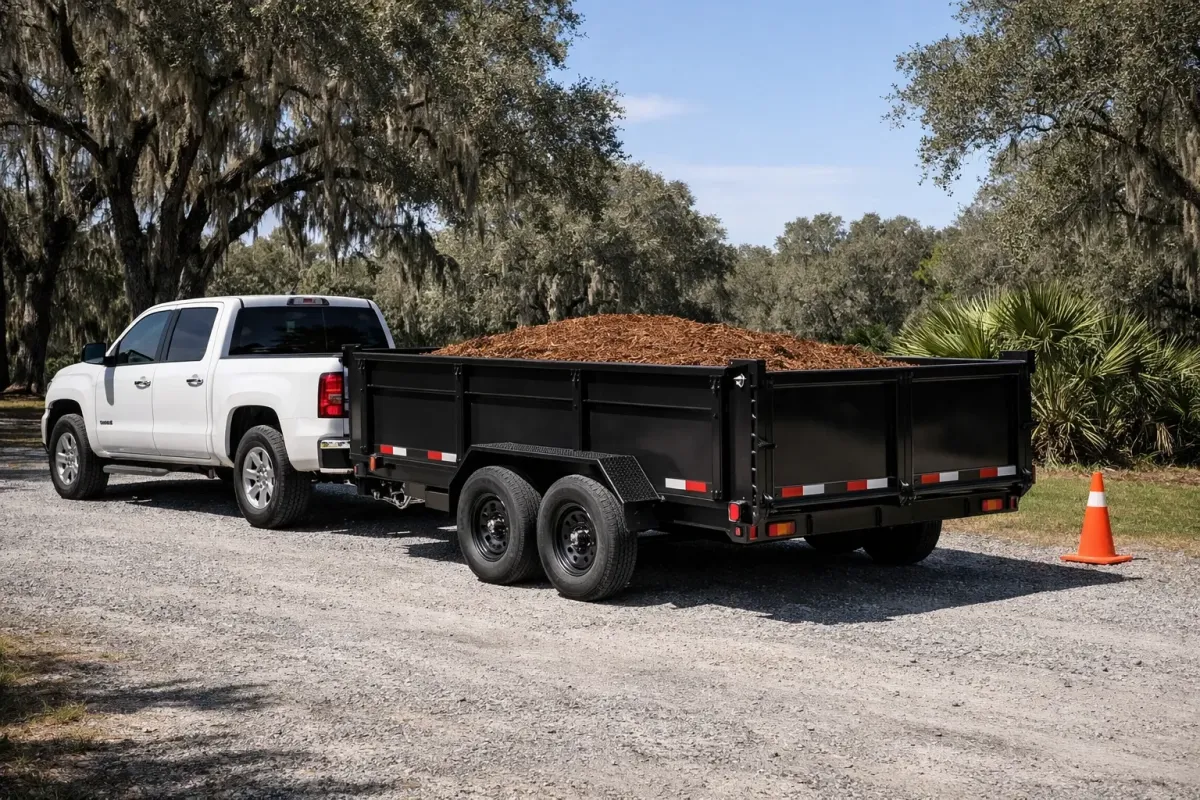
Dump Tailer Mistakes
5 Costly Dump Trailer Mistakes (and How to Avoid Them)
![[HERO] 5 Costly Dump Trailer Mistakes (and How to Avoid Them)](https://cdn.marblism.com/IJBJfVhHqEI.webp "[HERO] 5 Costly Dump Trailer Mistakes (and How to Avoid Them)")
Dump trailers make jobs easier: landscaping cleanups in Marion County, construction debris removal, farm work around Ocala. But one careless mistake can cost you repair bills, safety violations, or worse. Most rental damage fees happen because renters don't understand how these machines actually work.
Our 7x14 dump trailer at Grab A Trailer uses a powerful scissor hoist with electric brake axles and a pull-back tarp system—features designed for reliability and safety when used correctly. Here are the five most expensive mistakes we see renters make, and exactly how to avoid them.
Scissor Hoist vs. Telescopic (Single-Ram) Lift Systems — The Quick, Neutral Breakdown
Both designs use hydraulics to raise the bed. Performance depends on the specific build—cylinder size, pivot points, frame design, maintenance, and how the load sits in the bed.
Scissor hoist systems often:
Provide stable lifting geometry through the dump cycle—especially as the bed gets higher
Handle unevenly distributed loads better (design-dependent), because the lift force transfers through the scissor linkage
Require more pivot points to stay greased & maintained
Telescopic (single-ram) systems often:
Offer a simpler-looking layout—fewer moving linkage points
Deliver strong initial lift when properly sized and maintained (design-dependent)
Feel more sensitive to load placement and side-to-side stability on uneven ground (design-dependent)
How to choose (based on your job)
Heavy, dense loads (dirt, rock, concrete) and frequent dumping: prioritize stability, consistent lift performance, and proper maintenance—either design can work, but load placement and level ground matter every time.
Occasional cleanup loads (yard debris, mixed jobsite trash): choose the trailer that fits your capacity and towing setup—then focus on balanced loading, tarping, and safe dumping habits.
Mistake #1: Loading All Your Weight at the Back (or the Front)
This is the number one way people damage dump trailers without realizing it. You're hauling concrete chunks from a driveway tear-out, so you load them all near the tailgate for easier dumping. Makes sense, right?
Wrong. That uneven weight distribution puts extreme stress on the rear axle, the hydraulic hoist system, and your hitch. When you try to dump, the hydraulic system works twice as hard to lift that concentrated load. Over time, this wears down the lift mechanism and can bend the trailer bed itself.
Loading everything at the front isn't better: it creates dangerous tongue weight that affects your truck's steering and braking.
How to avoid it: Distribute your load evenly across the entire trailer bed. Heavy materials like stone, asphalt, or soil should be spread from front to back, not piled in one spot. If you're hauling demolition debris with mixed weights, place heavier items low and centered, lighter materials on top.

When you hook up your trailer at our Ocala location, take a minute to visualize where your load will sit. A balanced trailer bed stays level, your electric brakes work properly, and the hydraulic hoist operates smoothly without strain.
Mistake #2: Skipping the Tarp (And Losing Half Your Load on I-75)
You're running late, the job's done, and you just want to get home. Throwing that pull-back tarp over your load feels like one extra step too many: until a chunk of drywall flies out on State Road 200 and you're facing a littering citation.
Florida wind speeds on the highway easily exceed 40 mph when you factor in your driving speed. Loose debris, dirt, mulch, and light construction materials will blow out. You lose material you paid for, create road hazards for other drivers, and risk fines that start at $500 in Marion County.
How to avoid it: Use the pull-back tarp system every single time. Our dump trailer's tarp is designed to deploy in under 60 seconds: pull it forward from the rolled position at the front, secure the bungee straps at the rear corners, and you're protected.
For extra-light materials like leaves, grass clippings, or sawdust, wet them down slightly before tarping. The added weight keeps everything in place. For mixed loads with sharp edges (rebar, metal scraps, broken tile), place a moving blanket or cardboard layer between the debris and the tarp to prevent tears.
Pro tip: Check your tarp tension before you leave the jobsite and again after your first few miles of driving. Vibration can loosen straps, and it takes five seconds to tighten them at a red light.
Mistake #3: Overloading Beyond the 14,000 lbs GVWR
The trailer looks empty. You've got room. Why not throw in that extra pallet of block?
Because our dump trailer has a Gross Vehicle Weight Rating of 14,000 lbs: and that includes the weight of the trailer itself. The actual payload capacity is lower, and exceeding it doesn't just void your rental agreement. It creates a dangerous towing situation where your truck can't stop effectively, the electric brake axles overheat, and you're one pothole away from a blowout.

Overloading also damages the hydraulic lift/hoist system. The hydraulic components are rated for a specific maximum load. Push past that limit, and you'll burn out the motor trying to raise the bed: or worse, the bed raises halfway and gets stuck, requiring expensive service calls.
How to avoid it: Know your material weights before you load. Here are rough estimates for common hauling jobs around Ocala:
Topsoil: 2,000–2,200 lbs per cubic yard
Sand: 2,400–2,700 lbs per cubic yard
Gravel: 2,800–3,000 lbs per cubic yard
Concrete debris: 3,000+ lbs per cubic yard
Asphalt millings: 2,300 lbs per cubic yard
A 7x14 dump trailer bed holds about 6 cubic yards at full capacity. Do the math before you start scooping. If you're hauling six yards of gravel, you're already approaching 18,000 lbs, well over the safe limit.
When in doubt, make two trips. Our competitive daily and weekly rates at Grab A Trailer make splitting heavy loads more affordable than repairing a damaged trailer or replacing your truck's transmission.
Mistake #4: Operating the Hydraulic Hoist on Uneven or Soft Ground
You finish a landscaping job, park on the grass beside your client's driveway, and hit the lift switch. The bed starts rising: then the whole trailer tips sideways as the rear wheels sink into soft soil.
Any dump trailer’s hydraulic lift/hoist system shifts weight as the bed rises. If you're on unstable ground, that concentrated rearward load can cause the trailer to sink, lean, or even flip.
This mistake happens constantly in rural Marion County where properties have sandy soil, muddy areas after rain, or unpaved access roads. One tip too far, and you've got thousands in damage plus a safety incident.
How to avoid it: Always dump on level, solid ground. Asphalt, concrete, or hard-packed gravel are your safest surfaces. Before you lift the bed, walk around the trailer and visually confirm it's sitting level.
If you absolutely must dump on softer ground, place wide plywood sheets or 2x12 boards under the rear wheels to distribute weight and prevent sinking. Never dump on a slope or incline: the trailer can roll or slide once the weight shifts backward during the lift.
Safety note: Keep bystanders at least 15 feet away from the trailer when operating the lift. Shifting loads can cause material to slide unexpectedly once the bed angles upward.

Mistake #5: Ignoring Your Electric Brake Setup (Or Not Having One)
Your truck has a seven-pin connector. You plug in the dump trailer, check your lights, and assume everything's good. Then you hit the brakes on a downhill stretch of U.S. 441 and the trailer keeps pushing you forward: because the electric brake system isn't getting power.
Our dump trailer uses electric brake axles rated for safe stopping with a 14,000 lbs load. But they only work if your truck has a functioning brake controller that sends the proper voltage signal through that seven-pin harness. Without it, you're relying entirely on your truck's brakes to stop a combined 20,000+ lbs of vehicle and load.
That's dangerous, illegal in Florida for trailers over 3,000 lbs, and guaranteed to cause accidents or citations.
How to avoid it: Before you rent, confirm your truck is equipped with:
A seven-pin trailer connector (not just a four-pin for lights)
An installed brake controller with adjustable gain settings
A properly wired harness that provides 12-volt power to the trailer's brake system
Not sure if your truck is set up correctly? Ask us when you schedule your rental. We'll verify your towing setup matches the trailer's requirements: just like we covered in our guide to towing capacity.
Before your first trip: Test the electric brakes in an empty parking lot. Accelerate to 15 mph and apply the brake controller manually using the hand lever (if equipped) or by pressing your brake pedal firmly. The trailer should provide noticeable stopping resistance. If it doesn't, adjust the gain setting higher until you feel the brakes engage.
Worn brake pads, corroded connectors, and loose ground wires are common culprits. A quick visual inspection of the connector before you hook up takes 30 seconds and can prevent a runaway trailer situation.
Why This Matters for Ocala Contractors & DIYers
These five mistakes account for 80% of dump trailer damage claims and safety incidents. The good news? They're completely avoidable with basic preparation and awareness.
At Grab A Trailer, we maintain our equipment specifically so you don't have to guess whether the hydraulic hoist system (scissor hoist), tarp system, or electric brakes are functioning properly. They are: but only if you use them correctly.
Our flexible rental options and competitive rates mean you can afford to rent the right equipment and take the time to operate it safely. Whether you're clearing a residential lot in Silver Springs or hauling materials for a commercial build in downtown Ocala, the few extra minutes spent loading properly, securing your tarp, and checking your brake controller will save you hundreds in repairs and potential fines.
Need a reliable 7x14 dump trailer in Ocala/Marion County for your next project? Check out our full trailer lineup or reach out—We're here to help you match your towing setup, confirm your 14,000 lbs GVWR plan, and run through safe dumping basics (level ground, balanced loading, and tarp secured).